
 Image 1 of 2
 Image 2 of 2
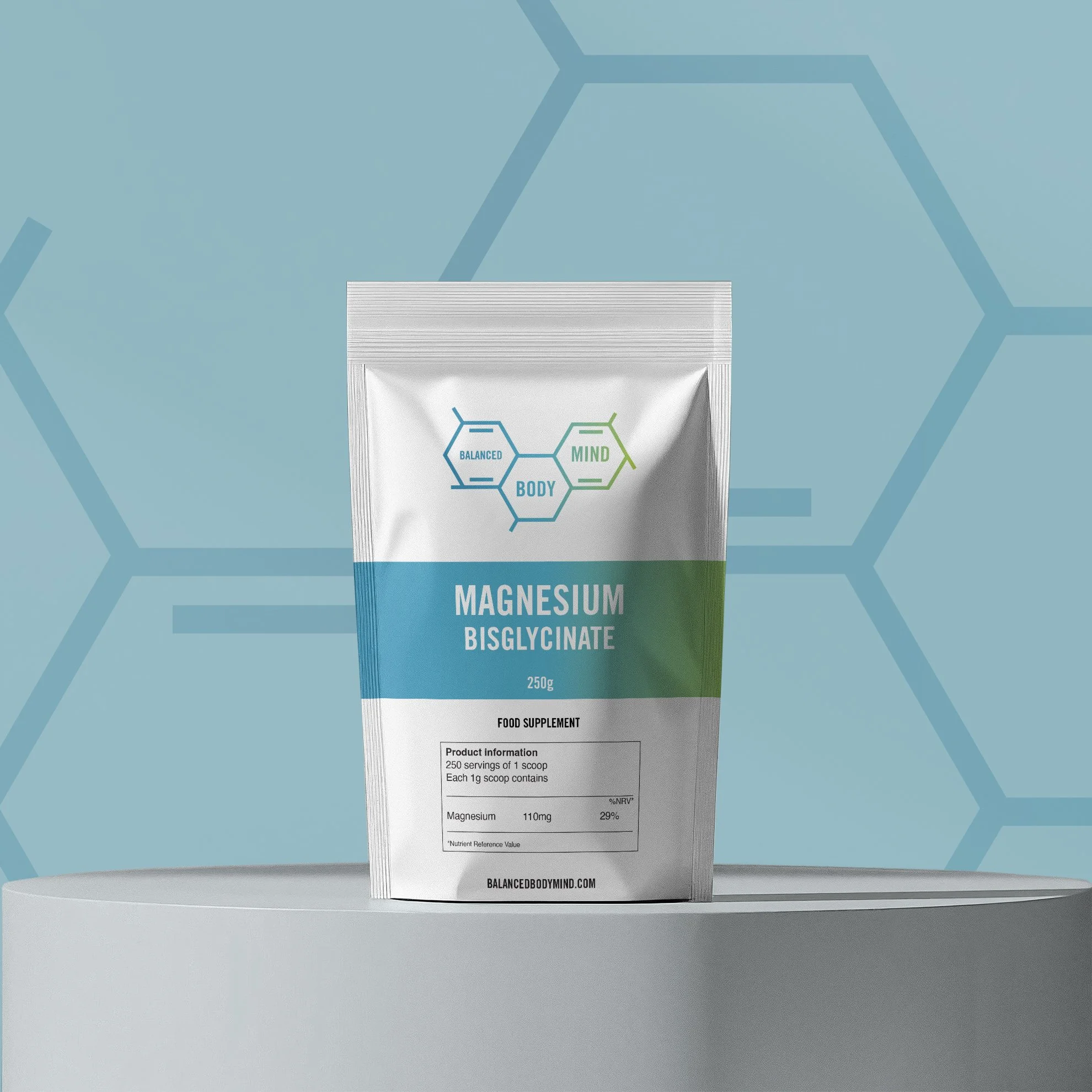
100% pure magnesium bisglycinate. No added magnesium oxide and zero fillers.
Serving size is 1 gram to provide 110 mg of magnesium.
Benefits of magnesium
Supports muscle and nerve function — Helps with muscle relaxation, contraction, and nerve transmission; may reduce muscle cramps, spasms, and soreness (especially after exercise).
Promotes heart health and cardiovascular function — Regulates heart rhythm, supports vasodilation, modestly helps lower blood pressure, and is linked to reduced risk of heart disease, stroke, ischemic heart disease, and sudden cardiac death (stronger evidence from higher dietary intake and serum levels).
Contributes to bone health — Aids in bone formation, calcium absorption, and mineralization; higher intake is associated with better bone density and lower osteoporosis risk, particularly in postmenopausal women.
Helps regulate blood sugar and reduces type 2 diabetes risk — Plays a role in glucose metabolism and insulin sensitivity; meta-analyses show higher magnesium intake linked to ~15% lower diabetes risk per 100 mg/day increase.
May improve sleep quality — Has a calming effect on the nervous system; often used to support better sleep, especially in forms like magnesium glycinate (evidence is promising but mixed).
Supports mental health and stress reduction — Contributes to reduced anxiety, depression symptoms, and overall nervous system relaxation.
Aids energy production and metabolism — Essential for converting food to energy, protein synthesis, and glycolysis.
Helps relieve constipation — Certain forms act as an osmotic laxative (well-established use in supplements and antacids).
May reduce migraine frequency and severity — Linked to fewer headaches in some studies.
Plays a role in reducing inflammation — Associated with lower markers like CRP in some research.
Supports overall disease prevention — Higher intake correlates with lower risks of chronic conditions like hypertension, certain cardiovascular events, and potentially others (e.g., emerging links to brain health or colorectal cancer modulation via gut bacteria in recent 2025 studies).
How does low thyroid function contribute to magnesium levels?
Reduced intestinal absorption of magnesium — Slowed gut motility (common in hypothyroidism due to low metabolic rate) impairs nutrient uptake from food, including magnesium.
Increased fecal (stool) excretion/loss — Constipation and sluggish digestion lead to more magnesium being lost in stool rather than absorbed.
Overall metabolic inefficiencies and poor nutrient extraction — Low thyroid hormone reduces the efficiency of breaking down and absorbing nutrients from food. This compounds deficiencies in magnesium and other minerals.
Increased cellular/tissue demand or sequestration — Some models suggest altered mitochondrial function and energy production in hypothyroidism tie into magnesium status (magnesium is crucial for ATP synthesis). Certain stress-related or inflammatory aspects in thyroid disease may deplete magnesium stores.
Secondary factors common in hypothyroidism — Chronic stress (elevated cortisol increases magnesium excretion), gut issues (e.g., low stomach acid, dysbiosis), or medications can exacerbate loss, though these aren't direct from the thyroid condition itself
Magnesium bisglycinate (also commonly called magnesium glycinate—the terms are often used interchangeably, though "bisglycinate" technically refers to magnesium chelated with two glycine molecules for potentially even better stability) stands out among magnesium supplement forms due to its unique advantages, particularly for daily use, especially in people with sensitive digestion, hypothyroidism-related depletion concerns, or those seeking benefits like relaxation, sleep, or stress support.Here are the main reasons it's often considered beneficial over other forms (like oxide, citrate, malate, taurate, etc.):
Superior bioavailability and absorption — It's a chelated form (magnesium bound to glycine amino acid), which allows it to be absorbed more efficiently in the intestines, often via amino acid transport pathways rather than just mineral channels. This leads to higher actual magnesium delivery to cells and tissues compared to poorly absorbed forms like magnesium oxide (which has very low bioavailability, often ~4-10%). Studies and reviews (including recent in vitro and animal data up to 2025) consistently show chelated forms like bisglycinate outperforming inorganic ones and even comparing favorably or better than citrate in many contexts.
Gentle on the digestive system / minimal laxative effect — Unlike magnesium citrate or oxide (which draw water into the intestines and commonly cause diarrhea, loose stools, or GI upset at moderate-to-high doses), bisglycinate is non-laxative and well-tolerated even at higher doses. This makes it ideal for long-term supplementation without unwanted bowel changes—especially helpful if hypothyroidism already contributes to constipation or slow gut motility.
Calming effects from glycine — Glycine is an inhibitory neurotransmitter and precursor to calming compounds. The extra glycine in bisglycinate (especially true bis form) provides additive benefits for sleep quality, anxiety reduction, stress relief, and nervous system support—beyond what magnesium alone offers. This synergy makes it particularly popular for evening use or mental health/muscle relaxation goals.
Better overall tolerability and fewer side effects — Lower risk of nausea, stomach cramps, or heaviness compared to citrate or oxide. Recent clinical observations (e.g., 2024-2025 trials) highlight its favorable side-effect profile, with some evidence of sustained plasma magnesium increases and good tolerance.
Versatile for general deficiency correction — Effective at raising magnesium levels without the trade-offs of other forms:
Vs. magnesium oxide → Much higher absorption; oxide is cheap but mostly passes through unabsorbed and is mainly for constipation relief.
Vs. magnesium citrate → Similar or slightly better absorption in some studies, but citrate is more laxative-focused; bisglycinate wins for non-GI uses.
Vs. magnesium malate → Malate may help with energy/fibromyalgia, but bisglycinate is gentler and more calming.
Vs. magnesium taurate → Taurate targets heart/blood pressure; bisglycinate is broader and better for sleep/stress.
In short, magnesium bisglycinate is frequently recommended as a "go-to" or "best all-around" form for most people because it maximizes usable magnesium while minimizing downsides. It's especially advantageous if you're addressing symptoms like poor sleep, muscle tension, fatigue, or anxiety—common in hypothyroidism.
100% pure magnesium bisglycinate. No added magnesium oxide and zero fillers.
Serving size is 1 gram to provide 110 mg of magnesium.
Benefits of magnesium
Supports muscle and nerve function — Helps with muscle relaxation, contraction, and nerve transmission; may reduce muscle cramps, spasms, and soreness (especially after exercise).
Promotes heart health and cardiovascular function — Regulates heart rhythm, supports vasodilation, modestly helps lower blood pressure, and is linked to reduced risk of heart disease, stroke, ischemic heart disease, and sudden cardiac death (stronger evidence from higher dietary intake and serum levels).
Contributes to bone health — Aids in bone formation, calcium absorption, and mineralization; higher intake is associated with better bone density and lower osteoporosis risk, particularly in postmenopausal women.
Helps regulate blood sugar and reduces type 2 diabetes risk — Plays a role in glucose metabolism and insulin sensitivity; meta-analyses show higher magnesium intake linked to ~15% lower diabetes risk per 100 mg/day increase.
May improve sleep quality — Has a calming effect on the nervous system; often used to support better sleep, especially in forms like magnesium glycinate (evidence is promising but mixed).
Supports mental health and stress reduction — Contributes to reduced anxiety, depression symptoms, and overall nervous system relaxation.
Aids energy production and metabolism — Essential for converting food to energy, protein synthesis, and glycolysis.
Helps relieve constipation — Certain forms act as an osmotic laxative (well-established use in supplements and antacids).
May reduce migraine frequency and severity — Linked to fewer headaches in some studies.
Plays a role in reducing inflammation — Associated with lower markers like CRP in some research.
Supports overall disease prevention — Higher intake correlates with lower risks of chronic conditions like hypertension, certain cardiovascular events, and potentially others (e.g., emerging links to brain health or colorectal cancer modulation via gut bacteria in recent 2025 studies).
How does low thyroid function contribute to magnesium levels?
Reduced intestinal absorption of magnesium — Slowed gut motility (common in hypothyroidism due to low metabolic rate) impairs nutrient uptake from food, including magnesium.
Increased fecal (stool) excretion/loss — Constipation and sluggish digestion lead to more magnesium being lost in stool rather than absorbed.
Overall metabolic inefficiencies and poor nutrient extraction — Low thyroid hormone reduces the efficiency of breaking down and absorbing nutrients from food. This compounds deficiencies in magnesium and other minerals.
Increased cellular/tissue demand or sequestration — Some models suggest altered mitochondrial function and energy production in hypothyroidism tie into magnesium status (magnesium is crucial for ATP synthesis). Certain stress-related or inflammatory aspects in thyroid disease may deplete magnesium stores.
Secondary factors common in hypothyroidism — Chronic stress (elevated cortisol increases magnesium excretion), gut issues (e.g., low stomach acid, dysbiosis), or medications can exacerbate loss, though these aren't direct from the thyroid condition itself
Magnesium bisglycinate (also commonly called magnesium glycinate—the terms are often used interchangeably, though "bisglycinate" technically refers to magnesium chelated with two glycine molecules for potentially even better stability) stands out among magnesium supplement forms due to its unique advantages, particularly for daily use, especially in people with sensitive digestion, hypothyroidism-related depletion concerns, or those seeking benefits like relaxation, sleep, or stress support.Here are the main reasons it's often considered beneficial over other forms (like oxide, citrate, malate, taurate, etc.):
Superior bioavailability and absorption — It's a chelated form (magnesium bound to glycine amino acid), which allows it to be absorbed more efficiently in the intestines, often via amino acid transport pathways rather than just mineral channels. This leads to higher actual magnesium delivery to cells and tissues compared to poorly absorbed forms like magnesium oxide (which has very low bioavailability, often ~4-10%). Studies and reviews (including recent in vitro and animal data up to 2025) consistently show chelated forms like bisglycinate outperforming inorganic ones and even comparing favorably or better than citrate in many contexts.
Gentle on the digestive system / minimal laxative effect — Unlike magnesium citrate or oxide (which draw water into the intestines and commonly cause diarrhea, loose stools, or GI upset at moderate-to-high doses), bisglycinate is non-laxative and well-tolerated even at higher doses. This makes it ideal for long-term supplementation without unwanted bowel changes—especially helpful if hypothyroidism already contributes to constipation or slow gut motility.
Calming effects from glycine — Glycine is an inhibitory neurotransmitter and precursor to calming compounds. The extra glycine in bisglycinate (especially true bis form) provides additive benefits for sleep quality, anxiety reduction, stress relief, and nervous system support—beyond what magnesium alone offers. This synergy makes it particularly popular for evening use or mental health/muscle relaxation goals.
Better overall tolerability and fewer side effects — Lower risk of nausea, stomach cramps, or heaviness compared to citrate or oxide. Recent clinical observations (e.g., 2024-2025 trials) highlight its favorable side-effect profile, with some evidence of sustained plasma magnesium increases and good tolerance.
Versatile for general deficiency correction — Effective at raising magnesium levels without the trade-offs of other forms:
Vs. magnesium oxide → Much higher absorption; oxide is cheap but mostly passes through unabsorbed and is mainly for constipation relief.
Vs. magnesium citrate → Similar or slightly better absorption in some studies, but citrate is more laxative-focused; bisglycinate wins for non-GI uses.
Vs. magnesium malate → Malate may help with energy/fibromyalgia, but bisglycinate is gentler and more calming.
Vs. magnesium taurate → Taurate targets heart/blood pressure; bisglycinate is broader and better for sleep/stress.
In short, magnesium bisglycinate is frequently recommended as a "go-to" or "best all-around" form for most people because it maximizes usable magnesium while minimizing downsides. It's especially advantageous if you're addressing symptoms like poor sleep, muscle tension, fatigue, or anxiety—common in hypothyroidism.