
 Image 1 of 2
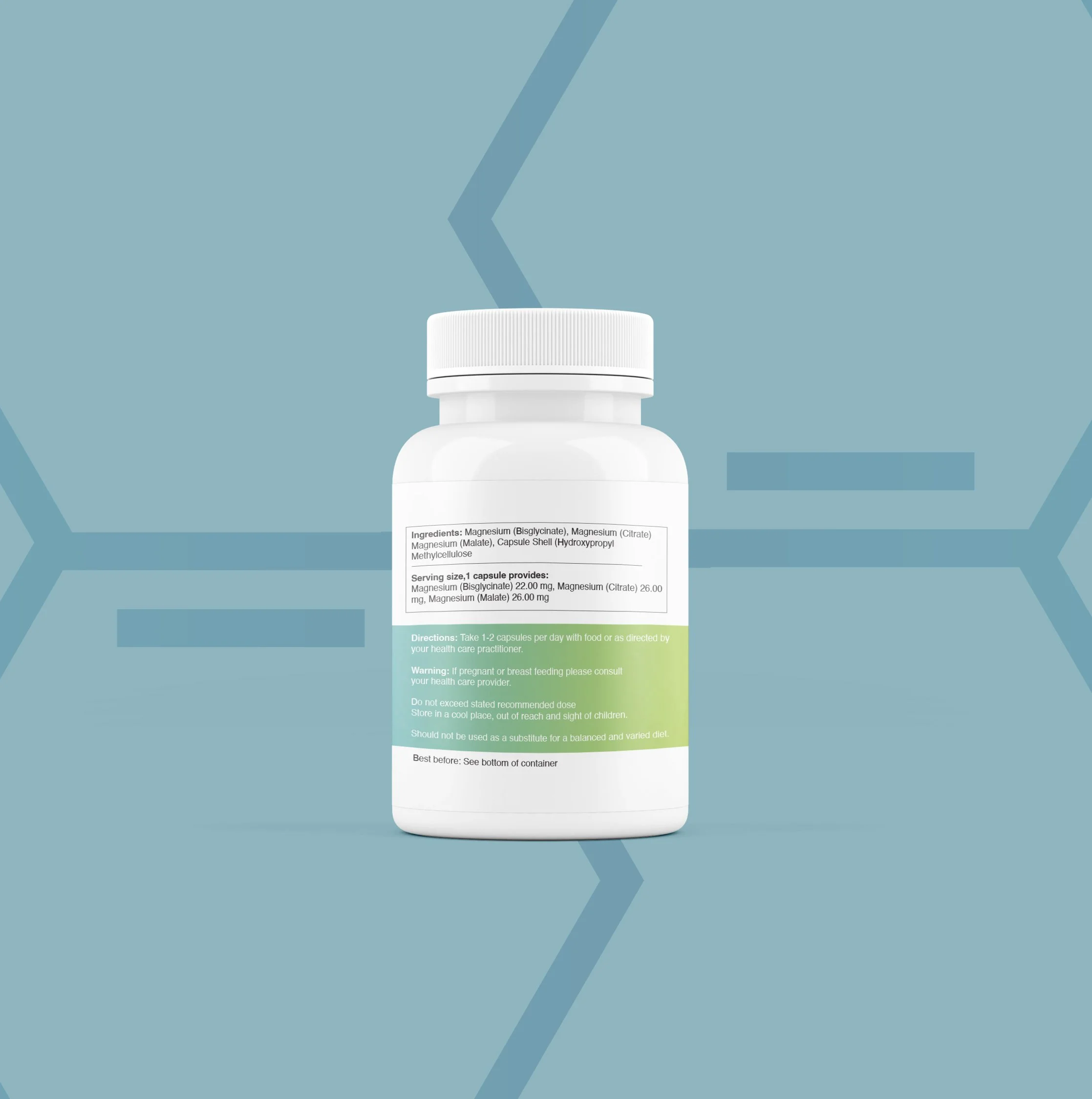 Image 2 of 2
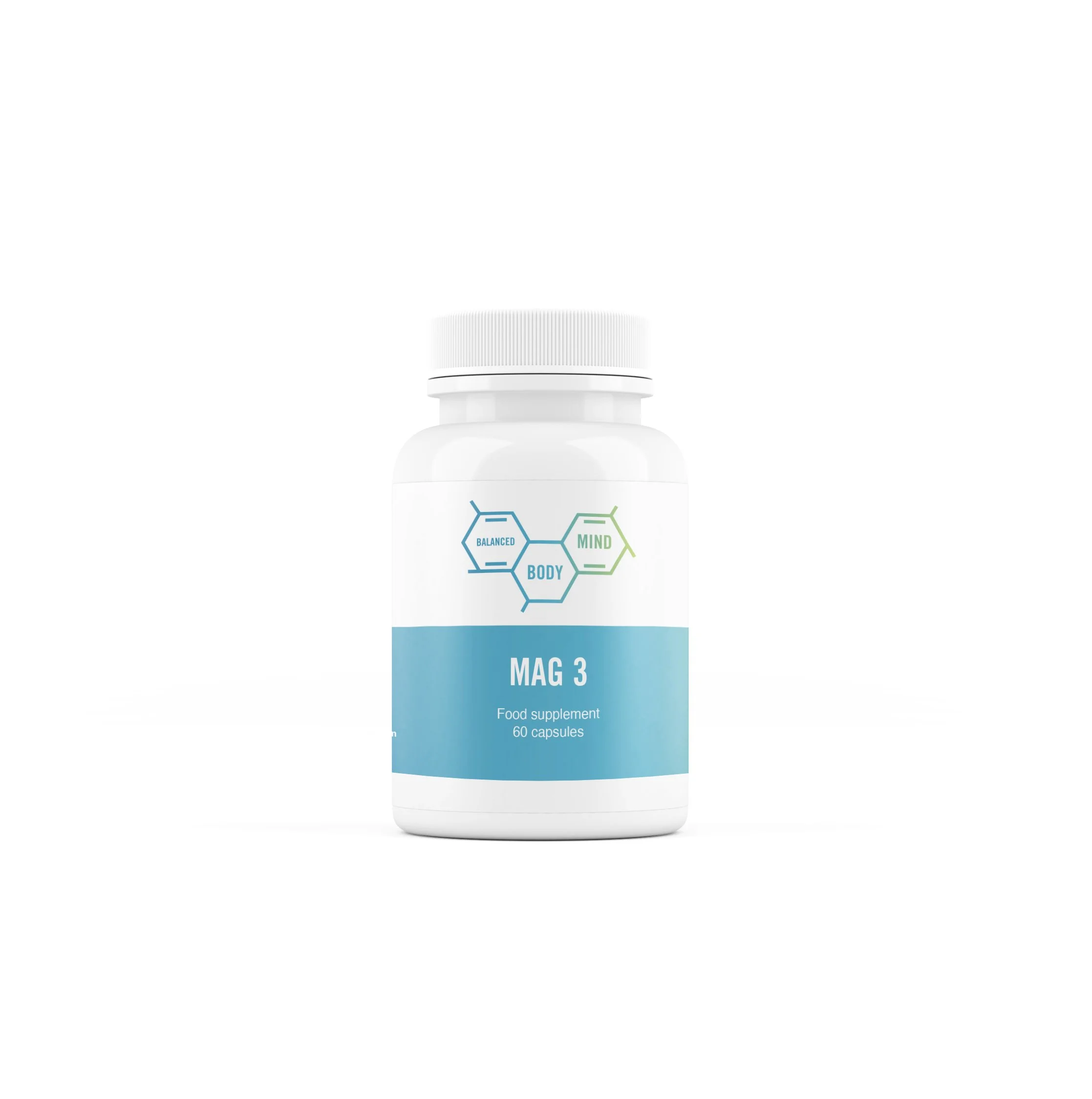
This new product is for those that don’t like the powder options available and is comprised of three type of magnesium in an easily digested capsule.
Each capsule contains:
Magnesium (Bisglycinate) 22.00 mg from 200.00 mg
Magnesium (Citrate) 26.00 mg from 173.33 mg
Magnesium (Malate) 26.00 mg from 173.33 mg
Capsule Shell (Hydroxypropyl Methylcellulose)
————
Directions: Take 2-4 capsules per day with food or as directed by your health care practitioner
Warning: If pregnant or breast feeding please consult
your health care provider.
Do not exceed stated recommended dose
Benefits of magnesium
Supports muscle and nerve function — Helps with muscle relaxation, contraction, and nerve transmission; may reduce muscle cramps, spasms, and soreness (especially after exercise).
Promotes heart health and cardiovascular function — Regulates heart rhythm, supports vasodilation, modestly helps lower blood pressure, and is linked to reduced risk of heart disease, stroke, ischemic heart disease, and sudden cardiac death (stronger evidence from higher dietary intake and serum levels).
Contributes to bone health — Aids in bone formation, calcium absorption, and mineralization; higher intake is associated with better bone density and lower osteoporosis risk, particularly in postmenopausal women.
Helps regulate blood sugar and reduces type 2 diabetes risk — Plays a role in glucose metabolism and insulin sensitivity; meta-analyses show higher magnesium intake linked to ~15% lower diabetes risk per 100 mg/day increase.
May improve sleep quality — Has a calming effect on the nervous system; often used to support better sleep, especially in forms like magnesium glycinate (evidence is promising but mixed).
Supports mental health and stress reduction — Contributes to reduced anxiety, depression symptoms, and overall nervous system relaxation.
Aids energy production and metabolism — Essential for converting food to energy, protein synthesis, and glycolysis.
Helps relieve constipation — Certain forms act as an osmotic laxative (well-established use in supplements and antacids).
May reduce migraine frequency and severity — Linked to fewer headaches in some studies.
Plays a role in reducing inflammation — Associated with lower markers like CRP in some research.
Supports overall disease prevention — Higher intake correlates with lower risks of chronic conditions like hypertension, certain cardiovascular events, and potentially others (e.g., emerging links to brain health or colorectal cancer modulation via gut bacteria in recent 2025 studies).
How does low thyroid function contribute to magnesium levels?
Reduced intestinal absorption of magnesium — Slowed gut motility (common in hypothyroidism due to low metabolic rate) impairs nutrient uptake from food, including magnesium.
Increased fecal (stool) excretion/loss — Constipation and sluggish digestion lead to more magnesium being lost in stool rather than absorbed.
Overall metabolic inefficiencies and poor nutrient extraction — Low thyroid hormone reduces the efficiency of breaking down and absorbing nutrients from food. This compounds deficiencies in magnesium and other minerals.
Increased cellular/tissue demand or sequestration — Some models suggest altered mitochondrial function and energy production in hypothyroidism tie into magnesium status (magnesium is crucial for ATP synthesis). Certain stress-related or inflammatory aspects in thyroid disease may deplete magnesium stores.
Secondary factors common in hypothyroidism — Chronic stress (elevated cortisol increases magnesium excretion), gut issues (e.g., low stomach acid, dysbiosis), or medications can exacerbate loss, though these aren't direct from the thyroid condition itself
This new product is for those that don’t like the powder options available and is comprised of three type of magnesium in an easily digested capsule.
Each capsule contains:
Magnesium (Bisglycinate) 22.00 mg from 200.00 mg
Magnesium (Citrate) 26.00 mg from 173.33 mg
Magnesium (Malate) 26.00 mg from 173.33 mg
Capsule Shell (Hydroxypropyl Methylcellulose)
————
Directions: Take 2-4 capsules per day with food or as directed by your health care practitioner
Warning: If pregnant or breast feeding please consult
your health care provider.
Do not exceed stated recommended dose
Benefits of magnesium
Supports muscle and nerve function — Helps with muscle relaxation, contraction, and nerve transmission; may reduce muscle cramps, spasms, and soreness (especially after exercise).
Promotes heart health and cardiovascular function — Regulates heart rhythm, supports vasodilation, modestly helps lower blood pressure, and is linked to reduced risk of heart disease, stroke, ischemic heart disease, and sudden cardiac death (stronger evidence from higher dietary intake and serum levels).
Contributes to bone health — Aids in bone formation, calcium absorption, and mineralization; higher intake is associated with better bone density and lower osteoporosis risk, particularly in postmenopausal women.
Helps regulate blood sugar and reduces type 2 diabetes risk — Plays a role in glucose metabolism and insulin sensitivity; meta-analyses show higher magnesium intake linked to ~15% lower diabetes risk per 100 mg/day increase.
May improve sleep quality — Has a calming effect on the nervous system; often used to support better sleep, especially in forms like magnesium glycinate (evidence is promising but mixed).
Supports mental health and stress reduction — Contributes to reduced anxiety, depression symptoms, and overall nervous system relaxation.
Aids energy production and metabolism — Essential for converting food to energy, protein synthesis, and glycolysis.
Helps relieve constipation — Certain forms act as an osmotic laxative (well-established use in supplements and antacids).
May reduce migraine frequency and severity — Linked to fewer headaches in some studies.
Plays a role in reducing inflammation — Associated with lower markers like CRP in some research.
Supports overall disease prevention — Higher intake correlates with lower risks of chronic conditions like hypertension, certain cardiovascular events, and potentially others (e.g., emerging links to brain health or colorectal cancer modulation via gut bacteria in recent 2025 studies).
How does low thyroid function contribute to magnesium levels?
Reduced intestinal absorption of magnesium — Slowed gut motility (common in hypothyroidism due to low metabolic rate) impairs nutrient uptake from food, including magnesium.
Increased fecal (stool) excretion/loss — Constipation and sluggish digestion lead to more magnesium being lost in stool rather than absorbed.
Overall metabolic inefficiencies and poor nutrient extraction — Low thyroid hormone reduces the efficiency of breaking down and absorbing nutrients from food. This compounds deficiencies in magnesium and other minerals.
Increased cellular/tissue demand or sequestration — Some models suggest altered mitochondrial function and energy production in hypothyroidism tie into magnesium status (magnesium is crucial for ATP synthesis). Certain stress-related or inflammatory aspects in thyroid disease may deplete magnesium stores.
Secondary factors common in hypothyroidism — Chronic stress (elevated cortisol increases magnesium excretion), gut issues (e.g., low stomach acid, dysbiosis), or medications can exacerbate loss, though these aren't direct from the thyroid condition itself